Sage Vyasa (also called Krishna Dvaipayana Vyasa) is one of the most important figures in Indian history and mythology. He is the author of the Mahabharata, compiler of the Vedas, and a key link in the great lineages of kings and sages.
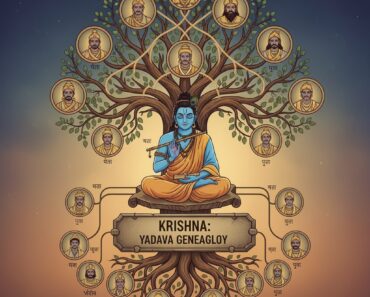
To understand his place in history, let us explore his family tree, both upwards (ancestors) and downwards (descendants through the Kuru dynasty).
🔼 Upward Lineage of Vyasa
-
Brahma – the creator in the Hindu trinity.
-
Vasistha – one of the Saptarishis (seven great sages), son of Brahma.
-
Shakti – son of Vasistha.
-
Parashara – son of Shakti, a great sage.
-
Vyasa (Krishna Dvaipayana) – son of Parashara and Satyavati.
So Vyasa belongs to the Brahma → Vasistha → Shakti → Parashara → Vyasa line.
🔽 Vyasa’s Birth and Family Connections
-
Vyasa was born to Parashara and Satyavati.
-
Later, Satyavati married King Shantanu of the Kuru dynasty.
-
With Shantanu, she had two sons: Chitrangada and Vichitravirya.
-
-
This makes Vyasa and Vichitravirya maternal half-brothers (same mother, different fathers).
🔽 Vyasa and the Kuru Dynasty (Niyoga Tradition)
When Vichitravirya died childless, the Kuru dynasty was in danger of ending. Following the practice of Niyoga (where a close relative fathers children on behalf of a deceased man), Satyavati called Vyasa to continue the line.
Vyasa fathered three important figures with Vichitravirya’s widows:
-
Dhritarashtra (blind king, father of the Kauravas).
-
Pandu (father of the Pandavas).
-
Vidura (wise minister, not a king).
Thus, through Vyasa, the Kuru dynasty continued.
🔽 The Kuru Lineage Downwards
Here is the simplified family tree from the ancient Kuru ancestors down to the Pandavas and Kauravas:
-
Samvarana
→ Kuru (founder of Kurukshetra)
→ Viduratha
→ Sudhanvan
→ Parikshit (elder)
→ Bhimasena (elder Kuru king, not Pandava Bhima)
→ Pratipa
→ Shantanu-
With Ganga → Bhishma (Devavrata)
-
With Satyavati → Chitrangada & Vichitravirya
→ (Through Vyasa’s Niyoga) -
Dhritarashtra → Kauravas (Duryodhana, Dushasana, etc.)
-
Pandu → Pandavas (Yudhishthira, Bhima, Arjuna, Nakula, Sahadeva)
-
Vidura
-
So the Pandavas and Kauravas are the grandsons of Vyasa in a unique way.
🔼 The Downward Legacy of Vyasa
-
Though Vyasa himself is more remembered as a sage than a king, his role as the father of Pandu, Dhritarashtra, and Vidura ties him directly into the great war of the Mahabharata.
-
Every major event of the Mahabharata flows from Vyasa’s position in this lineage.
✅ Summary
-
Upward: Vyasa descends from Brahma through Vasistha → Shakti → Parashara.
-
Sideways: Vyasa is the half-brother of Vichitravirya (through Satyavati).
-
Downward: Vyasa fathered Dhritarashtra, Pandu, and Vidura, making him the grandfather of both Pandavas and Kauravas.
Thus, Sage Vyasa is not only the composer of the Mahabharata but also a central character whose own family connections shaped the epic itself.